
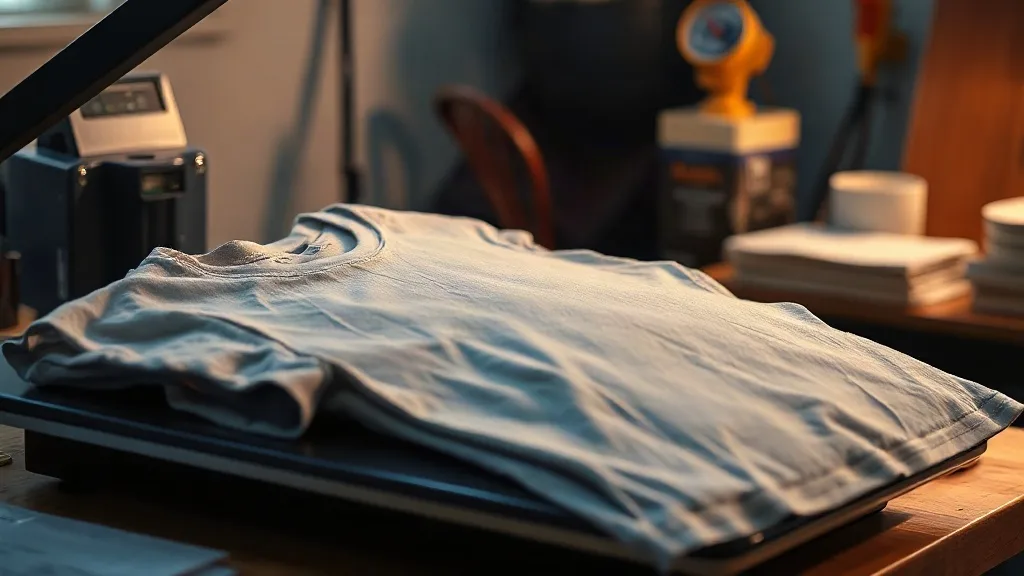
You press a shirt, hand it to the customer, and a week later the message arrives: the print is lifting at one corner. Nothing drains a small shop's confidence faster than a returned garment, and peeling is the failure that shows up most often in the first ten washes. The good news is that peeling rarely comes from a bad roll of film. In most cases the dtf transfers themselves were fine, and the problem happened somewhere between the powder shaker and the final cool-down.
This guide walks through the failure modes I see most often in a working print room, in the order they usually occur. You will learn how to tell a moisture problem from a pressure problem, why the peel timing matters more than most operators think, and how to build a simple test routine so you catch a bad batch before it reaches a customer.
Start With the Film, Not the Press
Before you touch a heat press setting, look at the printed sheet under a bright light. A healthy dtf film has an even, matte white layer with no visible pinholes, no shiny patches, and no areas where the white looks thin enough to see the color beneath. If the white layer is uneven, the problem started at the printer, and no amount of press tuning will rescue it.
Signs the powder stage went wrong
- Shiny, glossy patches on the white layer, which usually mean too much powder or uneven melting
- Bare spots where the white looks translucent, usually from powder that did not adhere
- Powder dust still visible on the sheet after curing, which points to under-curing or excess powder
- Film that curls hard at the edges, often a sign of moisture absorbed during storage
If you spot any of these, fix the film first. A sheet with a weak white layer will peel no matter how perfect your press settings are, because the adhesive has nothing solid to bond with.
The Four Real Causes of Peeling
When a customer sends back a shirt with a lifting edge, the cause almost always falls into one of four buckets. Working through them in order saves time and stops you from changing five variables at once.
1. Moisture trapped in the garment
Cotton holds ambient humidity, and a shirt that has been sitting in a cool, damp stockroom can carry enough moisture to sabotage a press. That moisture turns to steam under the platen and forms a barrier between the adhesive and the fabric. The print looks fine when it comes off the press, then lifts after the first wash as the bond fails.
Pre-press every garment for three to five seconds at your transfer temperature. You will see the steam rise. If a shirt needs more than one pass to stop steaming, let it cool and press again. This single habit eliminates a large share of peeling complaints, and it costs you almost nothing in time.
2. Heat that is too low or too high
Low heat leaves the adhesive under-activated, so it never fully flows into the fabric. High heat can scorch the adhesive or cause the film to release before the bond sets. Both produce a print that feels attached at first and fails later.
Most films sit in a workable range of roughly 150 to 165 degrees Celsius, but the number on your controller is not the number at the platen. A cheap infrared thermometer will tell you what is actually happening. Measure the platen surface, not the display, and check it again after a long run when the press has been cycling for an hour.
3. Pressure that varies across the platen
Uneven pressure is the sneaky one. A press that is tighter on the left than the right will produce prints that hold on one side and peel on the other. You can test this without any special tool: press a sheet of copy paper, then look at how the fibers compress. Darker, more compressed areas are receiving more force.
Adjust the pressure knob until the compression looks even across the whole platen, then lock it and leave it alone. Medium pressure is usually enough for dtf transfers. Cranking it down harder does not improve adhesion and can push adhesive out past the edges of the design.
4. Peeling at the wrong temperature
This is where opinions differ, and where a lot of shops get into trouble by copying a setting from a video without testing it. Hot peel films want the sheet removed immediately while the garment is still on the platen. Cold peel films need the garment to cool, sometimes for a full minute, before the film comes away.
Mixing the two habits is a common cause of distorted edges and lifted corners. Check what your supplier specifies, write it on a label next to the press, and train everyone who touches the machine to follow it.
Building a Test Routine That Catches Failures Early
Every new roll of film, every new garment style, and every new powder batch deserves a test print. The routine does not need to be elaborate. Print a small design with fine detail and a solid white block, press it onto the actual garment you plan to sell, then run it through a wash cycle at 40 degrees with a normal detergent load.
Inspect the print while wet and again after drying. Look for lifting at the edges, cracking across the white, and any change in how the print feels to the touch. If the test survives three washes, you can trust the combination for production. If it fails, you have found the problem on a sample instead of on fifty customer orders.
Keep a simple log of the settings that worked: temperature, time, pressure, peel type, and garment supplier. Shops that track this end up with a library of proven combinations, and new staff can get up to speed without guessing. If you are sourcing film and want a consistent starting point, the range at dtf transfers is worth reviewing alongside your own test results.
What to Do With a Shirt That Already Peels
Not every failed print is a total loss. A small lift at one corner can sometimes be rescued by placing the garment back on the press with a sheet of silicone paper over the print and applying heat and pressure for a few seconds. This reflows the adhesive and can re-bond the edge.
Be honest about the limits, though. If the white layer itself has cracked or the print has lifted across a wide area, a repress will not fix it. Replacing the garment protects your reputation, and a short explanation to the customer about what you changed goes a long way.
Storage Habits That Prevent Surprises
Film and powder are both sensitive to humidity. Store unopened rolls in a sealed bag with a desiccant packet, keep the print room below roughly 60 percent relative humidity if you can, and never leave film sitting on an open shelf overnight in a damp space. Powder should be kept in a sealed container and shaken rather than scooped, which keeps clumps out of the application.
Printed sheets that will not be pressed the same day should be stored flat and dry, away from direct sunlight. Curled film is harder to position accurately and can trap air during pressing, which creates the small bubbles that later become peel points.
If you are searching for a reliable local source and typing dtf transfers near me into a search engine, ask the supplier how their film is stored before it ships. A vendor who keeps stock in a climate-controlled space is less likely to send you a roll that has already absorbed moisture.
Frequently Asked Questions
Why does my DTF print peel only after washing and not before?
The bond can look and feel solid straight off the press even when the adhesive has not fully penetrated the fabric fibers. Washing adds mechanical agitation and water, which exposes a weak bond. If peeling appears only after the first wash, moisture in the garment or insufficient pressure are the two most likely causes.
Can I press DTF onto a shirt that has already been worn and washed?
Yes, but pre-press it thoroughly to drive out moisture and be aware that washed fabric has a slightly different surface. Some shops add a few seconds to the press time for previously washed garments. Always run a test print if you are trying a new garment type.
Does fabric softener cause DTF prints to peel?
Residue from softener and some detergents can build up on the print surface over time and weaken the edges, but it is rarely the primary cause of a first-wash failure. Wash new printed garments inside out in cool water and skip the softener for the first few cycles to give the bond the best chance.
How long should I wait before washing a freshly pressed DTF shirt?
Waiting 24 hours is a sensible habit, even though many prints are washable sooner. The adhesive continues to settle as the garment cools completely, and giving it a day removes any doubt. Tell customers the same thing so they do not wash the shirt the same evening they receive it.
Is peeling more common on certain fabrics?
It shows up more on heavily textured fabrics, tight knits with a slick finish, and garments with a water-repellent treatment. Smooth cotton and cotton-poly blends tend to bond well. If a particular blank keeps failing, switch suppliers or run a wash test before committing to a large order.